We All Need Gathering Places

Arthritis Introspective 9th Annual Gathering: #GrowTogether16

Nashville, Tennessee

May, 2016

Dear Journal,

I’m spending the weekend with a lot of really special people. We’ll drink alcohol, many of us. And take lots of drugs combined. Lots and lots of drugs.

Drugs we wish we didn’t have to take. Did you think this was Burning Man?

No. We’re all sick. We all have some form of arthritis, and many of us brought loved ones with us. We came to have fun – not despite – because we have arthritis.

We didn’t come here to complain. We came to share experiences and be reminded that we aren’t alone. We are a family. We know exactly what it means to survive, and we are determined to be whole humans in the process.

Many of us suffer from multiple chronic conditions because of and/or in addition to our arthritis: depression, anxiety, heart disease, diabetes, chronic respiratory conditions, high blood pressure, etc.

And the drugs. Oh the drugs. Did I mention the drugs? Biologics. Corticosteroids. Chemotherapy. Non Steroidal Anti-Inflammatories. Analgesics (oral and topical), Disease Modifying Antirheumatic Drugs, eye steroids (did you know there are steroids for eyes?). Sleep medication. Anxiety medication. Depression medication. Blood pressure medication. Insulin. Medical Marijuana. Etc. Etc. Etc. Continue reading We All Need Gathering Places

Chronic Doesn’t Go Away

Chronic does not mean predictable. Chronic does not mean temporary. It also doesn’t mean consistent, monotonous, predictably repetitive, or habitual. It’s not banal or soporific. Except that it is.

It can be seen, yet it is invisible. It’s tedious, at the same time that it’s not. It’s not a routine, at the same time that it is. Everything changes, at the same time that nothing really changes.

Which is why we have such trouble understanding it.

Like the Greek word agápe, with no direct English translation, chronic disease – chronos – does not translate into something we can make sense of at first either. The idea that anything will last until we die is far-fetched (except for happy marriages and twinkies).

‘Chronic’ doesn’t fit our understanding of how health and sickness works. We’ve been conditioned to believe that our illnesses are curable; if we just try enough treatments we’ll get better. Injectables, swallowables, stitchables, chemicals, radiation(ables) can fix anything.

Except that they can’t.

Chronic disease is like a parasite; surviving off its host, always adapting to resist being eradicated. The intense throbbing of an anxious and overburdened body is an unwelcome, yet familiar, intrusion with the dawning of each new day.

Chronic disease is unpredictable and that unpredictability makes it nearly impossible to control. The drugs may not be permanent but some side effects are, and the progressive nature of the disease introduces new symptoms when least expected – symptoms that will be forever crashing workdays, nap times, parties, and vacations.

Imagine every injury or mystery pain is there to stay. No longer are muscle strains and sprains healed with heat/ice and stretching; the pain never goes away. No longer are a stuffy nose and sore throat symptoms of a common cold; they are now permanent. No longer is an all-over, throbbing ache a warning sign of the flu; it is reality 24/7/365.

We who have these forever conditions don’t get used to them. There is a degree of accepting them, and though we adapt to these changes in our bodies with no other choice, we still remember what we used to be capable of. Even if we’d prefer not think about our losses, our medical charts track them for us. We can hope for remission, but anyone who knows anything about cancer understands that remission is a sleeping dragon.

Chronic is the wicked word, not disease. Because chronic is the reason our diseases stay.

Chronic doesn’t go away.


If you found this post useful in some way, please consider supporting my work with a $3 tip at ko-fi.com/beingcharis. Your support will help me keep the lights on and make me smile.

My Walk to Cure Arthritis

I still remember my first time. I showed up curious, yet expecting to be bored. After doing cancer walks and fundraisers for everyone else, this was just another event for people with some horrible condition. I didn’t really take it seriously – after all, arthritis was for old people, not me.  This walk felt like something else to fill up space on my calendar. I could be doing…something else.

It was May 18th, 2013, and I was standing in front of the California State Capitol building at 8:30am. A month earlier I had been diagnosed with Ankylosing Spondylitis. It was “California-HOT.” People were gathered around without much energy – people I didn’t know, until a few friends showed up and held me upright while I wondered for the last time what I was actually doing there. I still didn’t want to accept I actually had arthritis.

935348_579433042076719_1780496394_n (1)
With Suzy, 2013 Arthritis Walk

I had raised over $2,000 for this walk. Raising the money was a way to share my story after the shock of hearing the words, “You have ankylosing spondylitis.”

It wasn’t about the money. It was about screaming at the top of my lungs to be heard after my world fell apart. It was about what I could control. While I couldn’t control this new diagnosis, I could make sure everyone in my life knew about it.

It wasn’t about the money. It was about people seeing my world fall apart, and I wanted my friends to glue me back together and erase the scars. Continue reading My Walk to Cure Arthritis

#Spondylitis Awareness Month

received_10156921444425347.jpeg
Image by Rich Beckermeyer Makeup by Alex Cassie

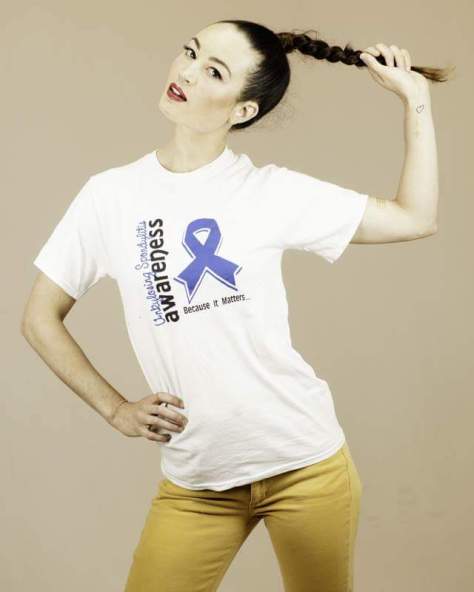
On April 11th, 2013, I walked into my first appointment with a Rheumatologist and walked out with a diagnosis of Ankylosing Spondylitis and the beginning of a life of advocacy, both for myself and for so many suffering silently with this progressive, degenerative, extremely painful disease.

I was always a strong person, yet I am stronger now than I ever was before, but in ways I don’t want to be. I would much rather have the freedom to choose to be mediocre if it meant I could have my health.

We do not choose to be strong. We become strong when we choose to survive.

April is Spondylitis Awareness Month. Learn about Ankylosing Spondylitis by watching this video created by the Spondylitis Association of America.  Then share it.


a voice for many