
Tag Archives: Christianity

Ableism Killed My Christianity

I rarely write posts here about my spiritual journey, but in this case I have chosen to share a deeply personal experience that addresses why I have left The Episcopal Church. Whether or not that’s a temporary decision, I can’t say.

Below, I am sharing an edited version of a Facebook post I wrote on March 29, 2019:


I have been quiet.

I have been quiet this week, but I have also been quiet over the last year and a half about a life calling I was responding to after years of holding off and saying, “No. Not yet.”

This is long. You might want to get tea before reading. I’m serious. Also, this post mentions topics and words related to Christianity, disability, and trauma.

When I was about fifteen, a dear mentor and mother figure was dying. Marny was a saint whose gifts were more powerful than a single person could hold. I was so intimidated by her holiness that I was afraid to ask her about it. Something about her goodness opened me up to my own light, giving me permission to grow into whoever it was that I should be. I wanted to be like her, but with a collar. At the age of fifteen or sixteen I realized a calling to the priesthood in The Episcopal Church. I couldn’t express what my call looked like, but I could feel it.

My community was supportive of me pursuing it and provided all the necessary details, should I move forward.

In the end, though, I decided to wait. To grow up a bit. To learn more about life. To see if, down the road, being a priest was really my calling. I pushed it to the back of my mind. Every few years I’d get a reminder to think about it again, but I’d keep it to myself. I’d push it back again to the back of my mind. And I would say, “No. Not yet.”

Continue reading Ableism Killed My Christianity

The Human Family Is Bigger Than Religion

Dear human family,

This past Sunday before church, a child in the pew behind me asked his mother why there was purple cloth over the cross. She said,

“Um, well that probably has something to do with the fact that it’s Lent.”

“What’s Lent?”

His mother and I both struggled with the proper words to explain Lent. Neither of us used Jesus language. We didn’t say that Lent is a somber period of time prior to Jesus being murdered and then resurrected three days later. We didn’t talk about Satan testing Jesus in the desert for 40 days. Instead, we explained that we cover crosses as a reminder to be introspective and thoughtful during the time before Easter. I offered that it’s a time to think about how we can make ourselves better people and the world a better place. Afterwards I thought about how, instead of filling this child’s head with jargon that he may remember but not understand, we sought to explain Lent in terms that anyone can understand – Christian or not, kid or adult, politician or constituent.  This child can grow up and be or become who or whatever he feels called to be, whether that happens to be Christian, Buddhist, Muslim, Wiccan, Agnostic, or Atheist. The list goes on.

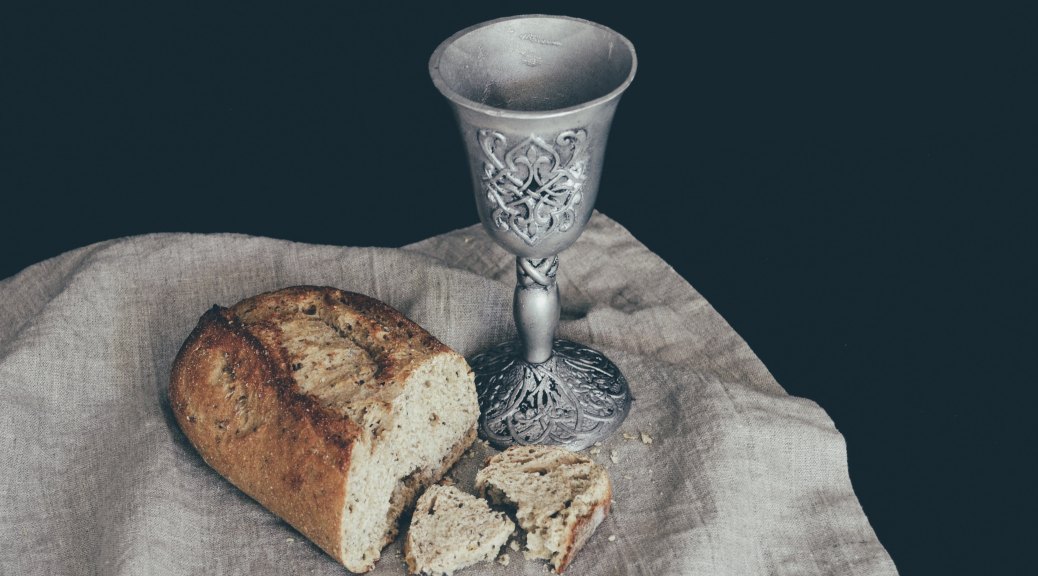
I realize Christians, especially Episcopalians, do things that sometimes appear silly, even to ourselves. We drape crosses in purple fabric. Swing incense. Smear ashes on our foreheads. Drink wine or grape juice and call it Jesus’ blood. Yet, these symbolic or theological rites that have been in practice for millennia have powerful meanings that carry great significance in our spiritual journeys. Yet, I argue, it isn’t our rites that make us Christian, but our hearts. And we all have hearts no matter our religious identities. Continue reading The Human Family Is Bigger Than Religion

I Might As Well Try This Jesus Guy

We’re now in the season of Lent. For my friends curious about the oddities of Episcopalians and many other Christians, Lent is the period of forty days (not counting Sundays) before Easter. It is the time Jesus spent fasting in the Judaean Desert, during which Satan tested him. Many Christians use this symbolic period of time each year, which begins on Ash Wednesday (“you are dust, and to dust you shall return” – a powerful reminder that we are all family), to give up or take on a practice that heightens spiritual introspection.

Lent isn’t just what precedes Easter; Easter couldn’t happen without Lent – the two events really go hand in hand. My interpretation is that Jesus’ time in the desert led to his most powerful, socially unacceptable actions – one of the reasons I love the guy so much. His time in solitude and introspection opened him in new ways to be a bold face of God, even – and especially – in situations that made others extremely uncomfortable and angry. He healed those who didn’t deserve to be healed, said things in synagogues that bothered people enough to drive him out of town, engaged in activities that weren’t appropriate for the Sabbath, and loved those who weren’t loved by anyone. And it was really tough on him; he spent a lot of time in the days leading up to his crucifixion in solitude and prayer.  He did radical things in the name of God which led to his punishment of crucifixion.

I have often thought about how, as Episcopalians, we go through the same calendar – rituals and roller coasters of pain, hope, fear, miracles, grief, joy, death, and resurrection – every year.  I like having a calendar, because no matter where I am in life I can go to an Episcopal service and find the familiar; and with the comfort of a liturgy that repeats itself in cycles I can come back to the same passages year after year and review my ‘christian growth chart.’   Continue reading I Might As Well Try This Jesus Guy