I formed my own blankets around the perimeter of your body so my covers wouldn’t be too heavy on top of you.
I slid a sheet over you and up to your neck and placed a stuffed sloth on your other side, so you’d feel safe, warm, and cocooned in love.
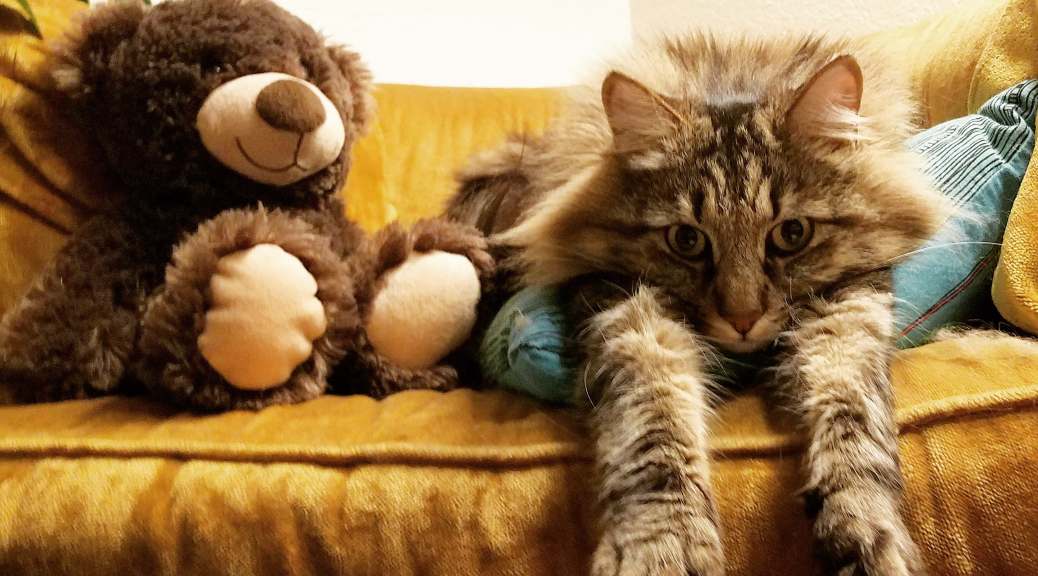
You were in the middle of the bed, stretched out from the tips of your furry Maine Coon paws to the fluffiest end of your tail, with your confused, exhausted face trying to find an acceptable semblance of peace and comfort within the echoey plastic orb of the protective cone around your neck.
It’s the season of dropping things, hips and elbows knocking door frames, “Will this flare ever end?” weeks, buckling knees on flat ground, brain fog competing with memories of the years when I felt younger than my age.
It’s the season of “But you don’t look sick, you look Great!” and “Have you tried yoga?”
It’s the season when, as soon as the door latches shut, the safety of our homes becomes the hell of letting our guards down, removing the mask. Our yoga is the inching off the bed on our bellies, gripping the prescription bottle to suck down a pill and doze for 30 minutes in half-inchworm-half-human-pose before grasping our walker to pee in the middle of the night with shuffle-steps amid stifling stiffness and the pain of partially fused joints that used to swim in the joint juice of cartilage. Chronic yoga.
Content note: this post discusses the topics of suicide and death.
I had a pretty good treatment day recently.
I didn’t even get upset that a new nurse tried and failed to get my infusion started. What’s another blown vein, anyway?
The infusion team was excited because they thought they’d seen a picture of me on a Facebook ad (it wasn’t me) – they’d even saved a screenshot to show me. My conversations with the nurses were light-hearted before I transitioned into catching up on emails.
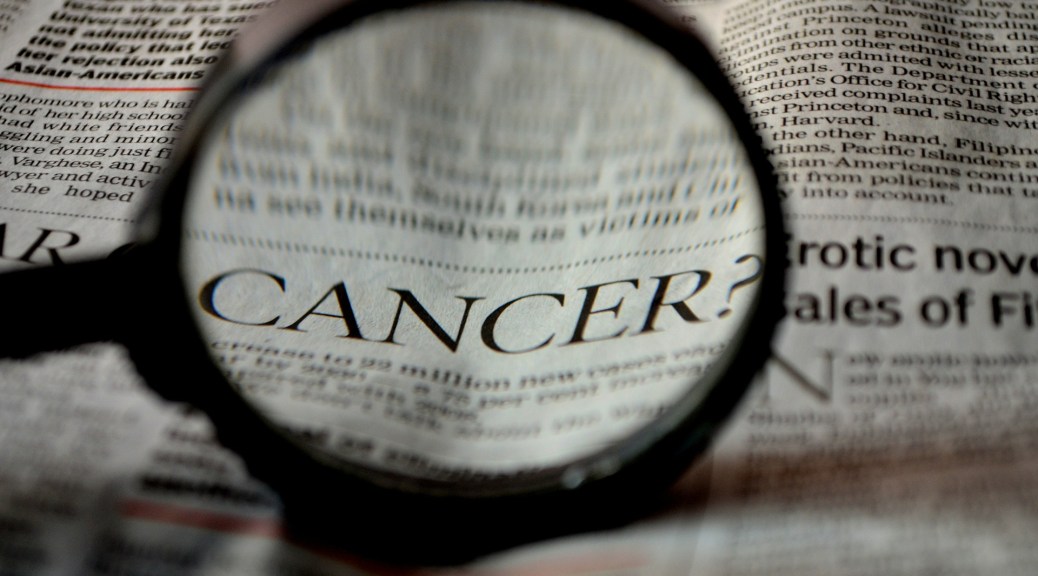
I hid myself in my favorite corner where I can sometimes pretend I’m the only one in the room and I nearly forgot I was in a building with the word “cancer” all over the front of it.
I love the infusion team. And I better love them – these are treatments that I’ll need for the rest of my life unless this drug stops working or a better treatment shows up. I’m what you call incurable.
But as I was leaving my appointment I almost walked into a vendor table being set up for an event. On the table was a sign reserving it for a lingerie business. And then my eyes caught something else: pink.
Pink was everywhere. Rose petal fabric. Pink shirts. Pink everything. Pink was in the air. It smelled pink.
October. Breast Cancer Awareness Month.
I can’t explain how crushing it was to leave my better-than-usual treatment, then turn the corner into an explosion of pink for an event that screamed, “You’re in someone else’s space.”
I have Ankylosing Spondylitis. The infusions I receive for my disease happen in a medical complex named Mercy Cancer Center. Every time I enter the building I see the name in big bold letters above the door and behind the check-in desk. While I wait for my appointment I see poster-sized lists of support groups and special events specifically for people with cancer.
Some might say it was a dream come true, but for me it was someone else’s dream I fell into. Alice didn’t expect to fall down a hole into Wonderland, and I didn’t expect to be diagnosed with a lifelong progressive disease when I was 26.
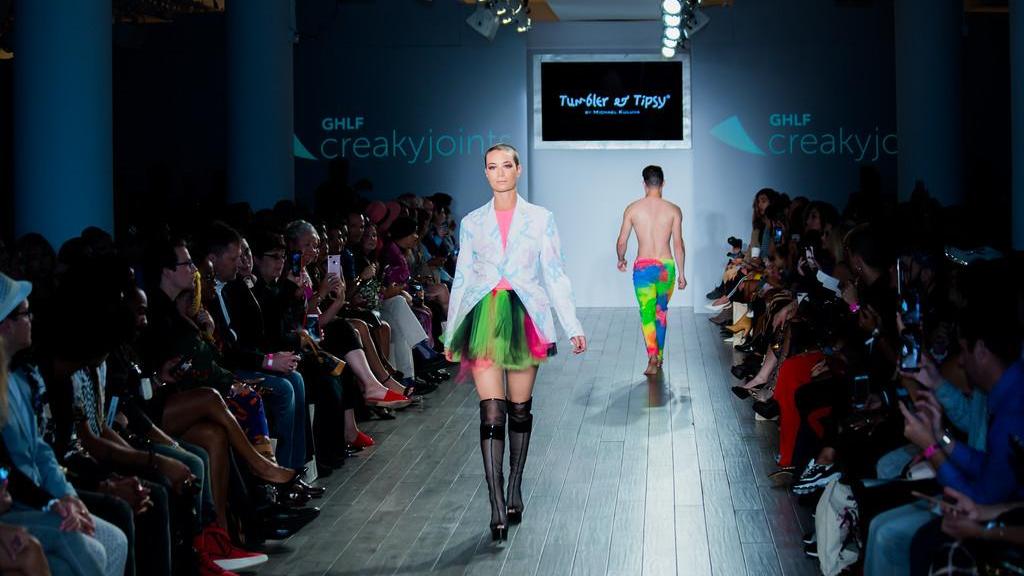
Around the time I was diagnosed with Ankylosing Spondylitis in 2013 I began modeling. Neither the diagnosis nor the modeling were expected. One happened by an invite I almost grudgingly accepted from a friend. The other happened via email from my estranged father. You can figure out which was which – at least I hope you can.
When I began modeling I had just begun hating my body. It had betrayed me by getting sick after decades of playing soccer, running marathons, and being a professional mover; none of which I could continue regularly after I was diagnosed. Being an athlete had been my whole identity. Suddenly I wasn’t anymore, and not by choice.
Being in front of the camera helped rebuild self-esteem and I began to love my body again, which surprised me. But, even more than enjoying being photographed, I uncovered a treasure trove of humanity behind the scenes. When I began sharing my story with Ankylosing Spondylitis (AS), I found many models, hair and makeup artists, designers, and photographers with their own stories of chronic disease.
We are by and large fed stories of health, ability, and perfection by the polished images we see of models on the runway or in magazines. We tend to believe models are perfect, healthy, able beings with happy lives. And in an industry known for celebrating a very narrow, specific type of beauty and body, nonconformity is ill-advised if you’re in the thick of it.
I learned quickly how easy it is to feign – yet also truly find – confidence and identity when performing for the cameras.


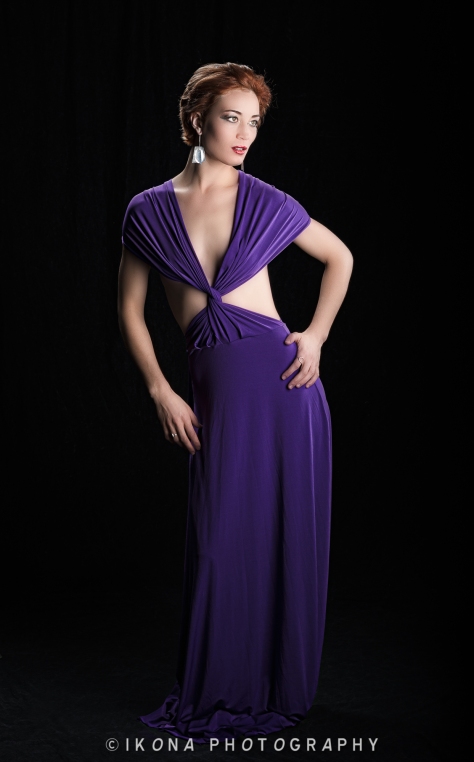
 BeingCharis