Tag Archives: ankylosing spondylitis

What Does Ankylosing Spondylitis Feel Like? Try This Written Simulation.

Pro-tip: if you have the opportunity, ask a friend to read this to you while you close your eyes so you can really imagine it.


Hey Spondy,

There’s a thick rigid belt around your hips & a dull pitchfork attached to the inside being pushed firmly against your lower back, forcing your stomach to curve perpetually forward in effort to escape the uncomfortable pressure.

A steel wire strung between your sacroiliac joints (the back of your hips) – drilled into the joints with hot barbed-wire screws – is being slowly tightened across your back, pushing that pitchfork deeper into the base of your spine. It’s progressively aggravating a deep, aching, stabbing pain at the core of your being.

Your body is pulsing with a desire for relief. Anything.

There’s a rope attached to the outside of both hips. It’s being pulled backward, forcing your hips to open slightly outward and making your lower back fold in on itself even more. It’s unnatural, limiting your ability to move your legs. You shuffle step to fight against the simultaneous pushing and pulling from behind. Your hips are fighting to function, but they can really only move a fraction of an inch with each step with this pain and stiffness, so you swing your legs forward to walk. Forward movement is the only option to escape the pressure of the pitchfork, even as you are being pulled from behind.

Large, flat weights are hanging from the front of the belt around your hips, rubbing and rigidly pushing against your thighs, restricting range of motion and weighing down your legs. You can barely lift your legs to push them forward to take a step.

Walking is so hard. Every step hurts more. It’s jarring. Your hips don’t propel you forward, your back doesn’t pull its own weight, your legs are sacks of sand, and you can only manage with an uneven shuffle push-pull of your legs into position. It feels like your spine is settling, crushing in on itself as you jostle it into sediment or quicksand. Or, as Mick Mars puts it, “quick-drying cement growing on the inside of your spine. Continue reading What Does Ankylosing Spondylitis Feel Like? Try This Written Simulation.
Women’s March: Make Universal Accessibility a Cornerstone

Millions, possibly billions, of people were devastated on election night in 2016.

I was one of them. I feared for my life.

I graduated Magna Cum Laude in 2009 with a bachelor’s degree, but I now try to survive on under $1,000 per month on Social Security Disability (SSDI) because of a disease I was born with. As a result of this incurable disease’s progression, I am fully disabled and impoverished. I am a living, breathing, pre-existing condition.

After the election sunk in, I desperately sought hope. I clung to the gleam of The Women’s March, craving for throngs of women to somehow save me from this new hell. I had dreams of attending the 2017 march in D.C. but wasn’t sure how I’d survive it. My inflammatory disease, Ankylosing Spondylitis, causes debilitating pain and fatigue if I exert too much energy or stand longer than a few minutes. I would have to rely on my cane, pain medications, and a slim chance of places to sit and rest during a march where I wouldn’t know many people. In the end I settled for attending my local march in Sacramento, CA.

I borrowed a huge, clunky wheelchair from my church and asked friends to push me in it. I noticed people’s kindness – those who made room when I asked for it – and I called it accessibility, when in reality the march’s overarching inaccessibility made it such that I had to rely on the kindness of strangers in order to participate (I remain grateful for the kindness). I had to do what many with disabilities must do in order to survive: ask for help; rely on others; and say, ‘Thank you,’ for not being trampled.

If I could make it to the front, I was told, there was an area for people with disabilities, but I learned of it a hundred yards away – and about two thousand ambulatory people swarmed in a pink pussy-hatted mass between it and me. So, I settled for less and pretended it was sort of OK that my primary view was of people’s butts and shoulder bags. Continue reading Women’s March: Make Universal Accessibility a Cornerstone

The Disease Everyone Loves to Hate

Content note: this post discusses the topics of suicide and death.


I had a pretty good treatment day recently.

I didn’t even get upset that a new nurse tried and failed to get my infusion started. What’s another blown vein, anyway?

The infusion team was excited because they thought they’d seen a picture of me on a Facebook ad (it wasn’t me) – they’d even saved a screenshot to show me. My conversations with the nurses were light-hearted before I transitioned into catching up on emails.

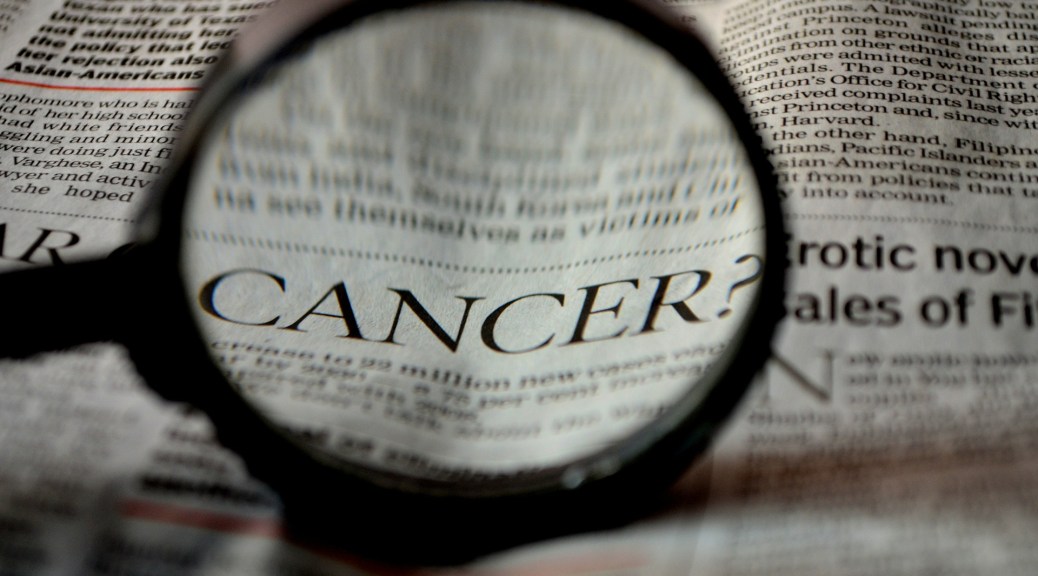
I hid myself in my favorite corner where I can sometimes pretend I’m the only one in the room and I nearly forgot I was in a building with the word “cancer” all over the front of it.

I love the infusion team. And I better love them – these are treatments that I’ll need for the rest of my life unless this drug stops working or a better treatment shows up. I’m what you call incurable.


But as I was leaving my appointment I almost walked into a vendor table being set up for an event. On the table was a sign reserving it for a lingerie business. And then my eyes caught something else: pink.

Pink was everywhere. Rose petal fabric. Pink shirts. Pink everything. Pink was in the air. It smelled pink.

October. Breast Cancer Awareness Month.

I can’t explain how crushing it was to leave my better-than-usual treatment, then turn the corner into an explosion of pink for an event that screamed, “You’re in someone else’s space.”

I have Ankylosing Spondylitis. The infusions I receive for my disease happen in a medical complex named Mercy Cancer Center. Every time I enter the building I see the name in big bold letters above the door and behind the check-in desk. While I wait for my appointment I see poster-sized lists of support groups and special events specifically for people with cancer.

Continue reading The Disease Everyone Loves to Hate

Raising Awareness on the Runway | I Took Ankylosing Spondylitis to New York Fashion Week

I modeled in New York Fashion Week recently.

Some might say it was a dream come true, but for me it was someone else’s dream I fell into. Alice didn’t expect to fall down a hole into Wonderland, and I didn’t expect to be diagnosed with a lifelong progressive disease when I was 26.

Around the time I was diagnosed with Ankylosing Spondylitis in 2013 I began modeling. Neither the diagnosis nor the modeling were expected. One happened by an invite I almost grudgingly accepted from a friend. The other happened via email from my estranged father. You can figure out which was which – at least I hope you can.

When I began modeling I had just begun hating my body. It had betrayed me by getting sick after decades of playing soccer, running marathons, and being a professional mover; none of which I could continue regularly after I was diagnosed. Being an athlete had been my whole identity. Suddenly I wasn’t anymore, and not by choice.

Being in front of the camera helped rebuild self-esteem and I began to love my body again, which surprised me. But, even more than enjoying being photographed, I uncovered a treasure trove of humanity behind the scenes. When I began sharing my story with Ankylosing Spondylitis (AS), I found many models, hair and makeup artists, designers, and photographers with their own stories of chronic disease.

We are by and large fed stories of health, ability, and perfection by the polished images we see of models on the runway or in magazines. We tend to believe models are perfect, healthy, able beings with happy lives. And in an industry known for celebrating a very narrow, specific type of beauty and body, nonconformity is ill-advised if you’re in the thick of it.

I learned quickly how easy it is to feign – yet also truly find – confidence and identity when performing for the cameras.

Image by Glenn Jones/Ikona Photography ©2014. My first in-studio photo shoot ever. I had no idea what I was getting myself into.

But anyone who knows me knows I’m not known for my conformity, so it wasn’t long before I was being myself. Continue reading Raising Awareness on the Runway | I Took Ankylosing Spondylitis to New York Fashion Week